Why are in-line check valves so expensive?
June 8, 2017
By: Bruce Ellis and Stephanie Jouppien
As Canada’s national DFT Check Valve channel partner, we speak with many different people across many different industries in need of an in-line check valve. Once we’ve priced out a valve that fits someone’s needs with custom sizing, trim and exotic metals, it’s common for a new user to baulk at the price tag. We’re used to hearing the question, “Why are check valves so expensive?”. That is why we feel the time has come to address one of the biggest factors in a customer’s buying decision: cost. Cost is a factor that tends to make a rookie salesperson uncomfortable, and I won’t lie, check valves aren’t all inexpensive. My intention is not to have you buy the most expensive valve on our shelf today. It is to have you look past the initial, upfront costs, and instead consider your needs combined with the lifespan you would like to get out of your valve.
In any given application, valves can cost four or five times as much as a competitive product, but here are 4 things that must be considered when weighing Cost vs. Benefits:
What is your media?
Are you dealing with a fluid that is highly acidic or caustic? If so, the trim in these applications may need to be of a higher-grade alloy than the standard offerings of 304 or 316 SS (stainless steel) for chemical resistance purposes. If required, most check valve manufacturers can offer you trim and casing choices ranging from alloy 20 to titanium. However, dependent on which alloy is needed, some prices will be inherently more expensive.
Does your pump have a high cycle rate?
This is where a simplistic valve design and custom sizing become important. With fewer moving parts than swing checks and double door designs, there is less chance of parts breaking off the valve and potentially damaging other components in the system. As we have explained here proper check valve sizing is essential to ensuring they function correctly and do not prematurely wear out internal components. Building a design around your flow and pressure needs, is the key to having a worry-free valve in service.
Do you have water hammer problems?
The DFT valve design virtually eliminates this costly and damaging issue. Again, this can be handled by custom sizing your valve for the application, not the line size. Unlike a swing check, DFT silent check valves do not rely on gravity or fluid flow to close. Instead, the disc closes by the spring assist, just a short distance from where the disc must close to prevent backflow and water hammer on both sides of the valve.
What is the cost of downtime?
Ask any Production Manager this question and they cringe. Imagine stopping production in a plant of 200 employees that make $20/hour CAD for an entire 8 hour work day. That’s $32,000 CAD in lost revenue for just a single day. Or imagine stopping production in a Northern mine where underground and service miners typically start at $21.50 CAD and are onsite 12 hours a day, 7 days a week, for 2 weeks at a time. An inferior check valve installed for de-watering in this instance could fail and lead to high revenue loss from labour and downtime.
All things considered, is it really expensive to use a top-quality product? Especially one that could be in service 70+ years from now? The answer is a resounding NO. It makes sense to use a check valve that is made to or above industry standards. It is also good to note that all DFT in-line check valves are made in the USA and were designed to give years of trouble-free service. Take these examples of application success stories from DFT Inc’s website:
Problem: A chemical facility in the USA, was experiencing extreme water hammer and pressure spikes with their cycling double door check installed in a cooling tower loop pump discharge application. This caused damage to the check valves and components around them. The 10” double door valves being used at the time, had to be replaced every 6 months due to cycling.
Solution: Three – 10”, 150/300# ALC Check Valves replaced the worn double door check valves eliminating the water hammer and the valves have performed well since installation.
Installed Since: 2012
Problem: A food processor in the Midwest was requesting assistance in their wash down stations that must be sanitized using very hot water at 74°C (165°F) or higher.
Solution: The DFT® model SCV® Check Valve was used to meet safety needs and criteria.
In Service Since: The 1950’s & 60’s.
Problem: A petrochemical plant was experiencing swing check valve failures. The plant was part of an OEM turbo-expander that originally installed swing check valves. These original valves had failed quickly due to low flow and excessive cycling/pounding.
Solution: The DFT® model GLC® Check Valves were custom-sized for this application to minimize excessive cycling and chattering problems that were seen with the previously installed swing-type check valves.
Installed Since: 1999
March 2, 2017
By: Bruce Ellis and Stephanie Jouppien
You may have heard this one before but size really does matter!
When it comes to check valves or one-way valves, the properly sized valve is the best preforming valve. As simple as this logic is, check valve sizing is largely misunderstood. Check valve “sizing” refers to how much the valve’s disc opens in order to accommodate media flow through a pipe – a vital component to the system’s overall functionality. Engineers typically oversize their designs anticipating a greater demand or line capacity down the road, however, it’s usually more than is necessary and many projects are already over-specified when designed. A good place to start with check valve sizing is to ask yourself:
“What will the check valve be used for 90% of the time?”
Check valves should be specified for the current application and can be re-sized at a later date to fit future requirements.
Check Valve Chatter: It’s Trying to Tell You Something
Valve sizing is by no means a new topic. Valve manufacturers have long recognized the importance of proper sizing and how often it’s misinterpreted in the field. It’s important to point out that unlike a standard open-close valve, check valves are flow sensitive. They are designed to allow fluid, steam or gas to flow in one direction. As the flow ceases, the valve’s internal disc automatically closes [see below video animation for more info]. Let’s say a project is over specified to use 6” piping where 4” would be suitable for its current use. In this instance, a 6” valve would be needed but is not the flow rate maximum (the maximum volume of media that travels through a pipe in one minute). A regular 6” valve used in this manner would be subject to pressure loss and would not fully open, causing it to flutter against its internal stop, making chattering sounds due to unstable flow. This will significantly shorten the valve’s lifespan by causing wear on the metal internals or by causing the disc to become stuck open, possibly leading to complete valve failure. Though less common, there are instances in which valves are undersized or under-spec’d which leads to a flow restriction.
How to Calculate Valve Size
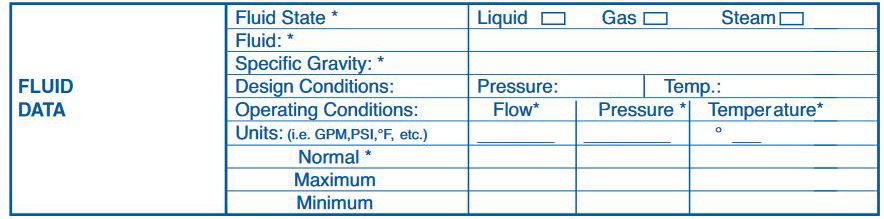
In order to properly size a check valve, you must have viscosity of material, media, pressure, temperature and flow rate (defined as: the number of US gallons of water per minute at 60°F that will flow through the valve with a pressure drop of 1 psi) to be able to customize a centre-guided check valve to the application – this involves changing the distance the disc travels from the closed to full open position. When the valve’s disc is stable and fully open or closed against the seat, no fluttering, chattering or excessive vibration will occur.
Tips & Tools for Sizing
DFT Inc. has a sizing program that uses the required information from above to calculate the required amount the valve must open to accommodate flow volume. This calculation is used to make a travel stop that is installed in the valve. The disc will be able to fully open against the stop, keeping it stable in the flow.
For further reading on check valve sizing, we recommend reading DFT’s E-Book: “Common Mistakes in Check Valve Sizing.” If you prefer a more personalized approach to sizing for a custom application, fill out this contact form and a check valve expert will follow up with you.
Proper sizing is essential and will ensure that the valve works at peak efficiency and will require less downtime, maintenance or result in a dreaded system failure. Happy Sizing!

Additional Resources:
A 360° Look at Check Valve Flow Orientation
DFT Inc. Silent In-Line Check Valve Brochure
November 14, 2016
By: Bruce Ellis
It’s fall and for some, still warm – but it won’t be long until another heating season begins. Some facilities are already seeing the restart of boilers, and so, I’ve decided to address a cold weather issue that often arises with industrial steam and water boilers this time of year: they don’t start. Is there anything worse than a service call at 3 AM in January when the temperatures outside drop to -20°C? Once you have eliminated each component in your boiler as a possible culprit to boiler failure and it comes down to a check valve sticking open or closed in your system, it’s time for a replacement.
Each boiler is unique in the way it is designed and your choice in replacement will be somewhat dependent on the specifications your system requires. Whether you have a liquid, gas or steam boiler, this introduction to DFT Inc.’s three most common check valves for HVAC service is sure to get you warmed up to a replacement valve.
Note: DFT also manufactures check valves for use in large industrial boiler systems. A complete guide can be found here.
BASIC CHECK VALVE
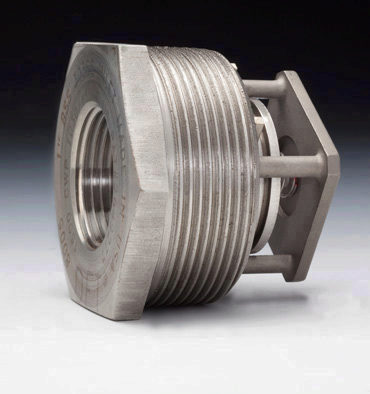
This proven check valve is suitable for a wide range of applications and is extremely versatile due to its ability to work at various pressures and temperatures. The Basic Check Valve can be made in different grades of stainless steel and is available from ¼” – 2 1/2” line sizes. The basic check can be used in installations requiring a CWP of 450-6,000 psi. DFT also manufactures the Basic Check with higher cracking pressures, from 2-40 psi. While the Basic Check is versatile, be sure to reference DFT Inc.’s full Catalogue for certain restrictions.
SCV CHECK VALVE
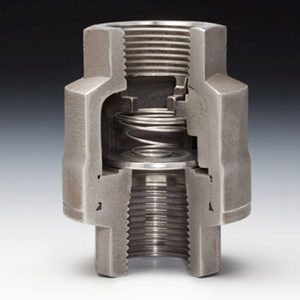
The most common check valve for use in steam applications, the SCV is also commonly used with liquid and gas. It uses the same trim as the Basic Check, in a durable body made of either 316 stainless steel, Alloy 20 or Hastelloy alloys with either FNPT or socket end welds. DFT SCV’s are available for ½”-3” pipe sizes and either 750 or 3,600 CWP. The SCV-R (Restrictor Check) is designed for higher cracking pressures than the standard SCV check valve. For a more simplified and flanged version of the SCV check valve, available in ASME Class 150 and 300, see DFT’s DLC check valve.
FBC CHECK VALVE
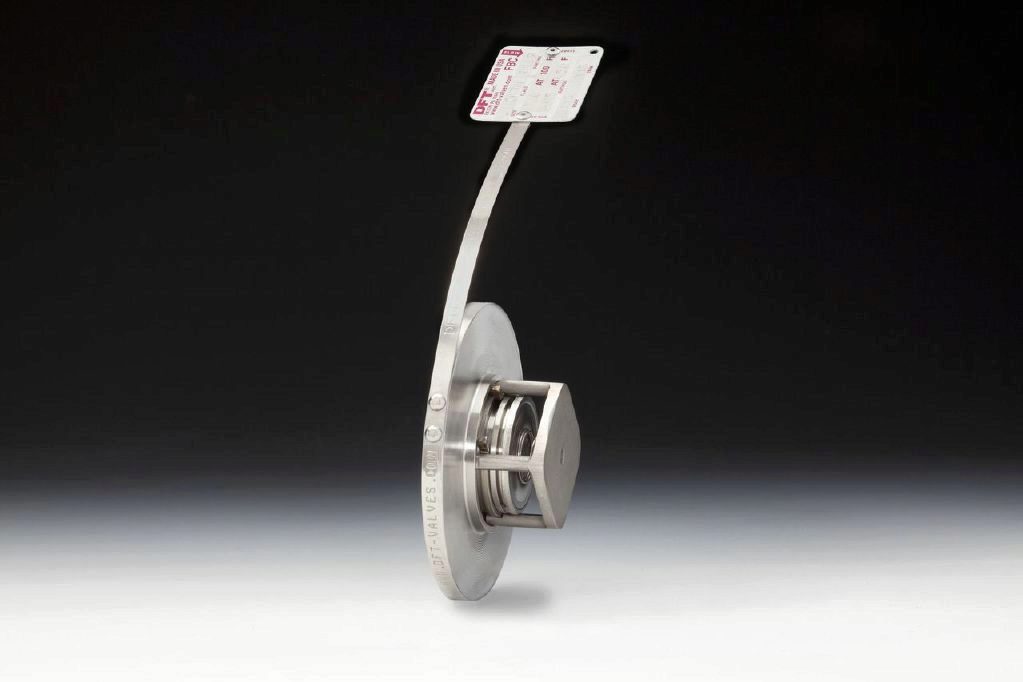
If you have an existing system with limited space – check this little space-saver out. The FBC “insert wafer” check valve is designed to be installed between two flanges and uses the same proven technology as the Basic Check valve. Though small, the FBC is made to last with stainless steel construction and a well-protected spring, not to mention the FBC can withstand temperatures up to 232°C (450°F). The FBC check valve works with schedule 40 pipe in the most common sizes 1”-4”, pressure class 150/300.
DFT Check Valves Used Extensively in HVAC
The simplicity and durability of DFT Valves has been proven since the original design dates back to the 1940’s and remains unchanged to this day. The non-slam, spring-assisted design prevents reverse flow and virtually eliminates water hammer in your system. All of DFT’s check valves are capable of water-tight shutoff, are easy to maintain, can be installed in any direction and are built to last. Our distributors and end-users tell us that “they last too long” and regularly comment on their unsurpassed design and efficiency. If you would like to learn more about DFT check valves for industrial steam, water or HVAC, let us know, we’re here to help.
Additional Resources
Design for Flexibility: Key Considerations to Make When Designing Fluid or Gas Flow Systems
DFT Check Valve Success Studies
Check Valve Application Data Sheet
Gas problems? No need to raise a stink!
May 31, 2016
By: Bruce Ellis
If you work in natural gas processing and refrigeration, chances are you know the demands of storing and transporting gas. Compared to fluid sealing and discharge, the media flow isn’t steady, instead, gas “pulses” (through a pipeline) from a reciprocating compressor. This pulsating flow created by the compressor causes the discharge valves to chatter, and while the sound may not be high on your daily list of concerns, the resulting wear or damage to your check valve and downstream components can eventually lead to costly headaches. With the ever increasing global demand for natural gas, issues with check valves and piping systems after installation of a reciprocating compressor is something we see occurring more frequently.
The problem: an ineffective check valve for gas applications.
With natural gas production set to double by 2017 (U.S Energy Information Administration), producers must ensure that their systems are designed with quality parts. While sourcing quality equipment can be time consuming and result in large up-front costs, having the right parts installed in your system will ensure less time spent on maintenance, downtime, and fewer future costs. Ineffective discharge valves are more likely to create issues and suffer undue wear than using a check valve built with a damped design to control the valve’s moving parts. It’s not unheard of to learn of parts that have broken off of valves, damaging downstream components which may cause system failure.
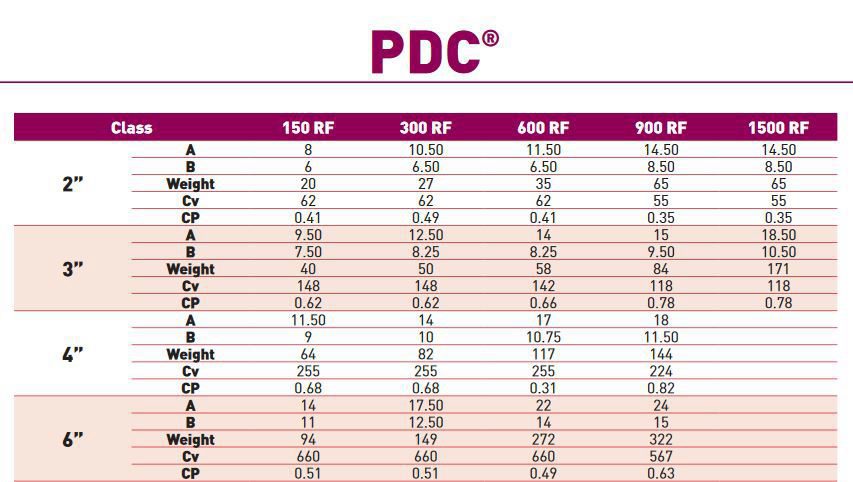
Built specifically for gas applications, DFT’s PDC check valve is a world-class solution found in oil refineries, gas pipelines, as well as storage and pump stations. Its pulse dampening chamber keeps the disc stable and in place (see below video). The PDC is also self-sizing, meaning it can handle different pressures and flow rates, without creating an issue or suffering undue wear. This flexibility extends the life of the valve. As an added benefit, the PDC can protect downstream equipment from damage that could be attributed to other types of valves if they fail.
The PDC check valve is manufactured to meet industry standards and can be built and tested to meet your company’s specifications. Available in various sizes and pressure classes, it can be manufactured using various metals, and is available with flanged, butt weld, or RTJ ends. If you would like to discuss your design needs, call us toll-free at 1-866-537-1133 or email bruce@trianglefluid.com.
Dimensions:
Additional Resources:
DFT Catalogue
Valve Data Sheet
Do you have an interesting idea for an industrial blog topic you would like to see covered? E-mail stephanie@trianglefluid.com.
January 12, 2016
By: Bruce Ellis
We are going to discuss check valve flow orientation and position!
The issue can come from different requirements caused by pump design or space limitations. As we know, not all styles of check valves are suitable for different flow directions. It is important to consider this when designing a system so the correct check valve can be specified. This can increase the performance and life span of the components in your system. Given correct information, DFT axial flow centre guided check valves can be customized to most applications. If we know the media, its specific gravity and system design specifications, pressure, flow rate, temperature etc.; a valve can be customized to suit your application.
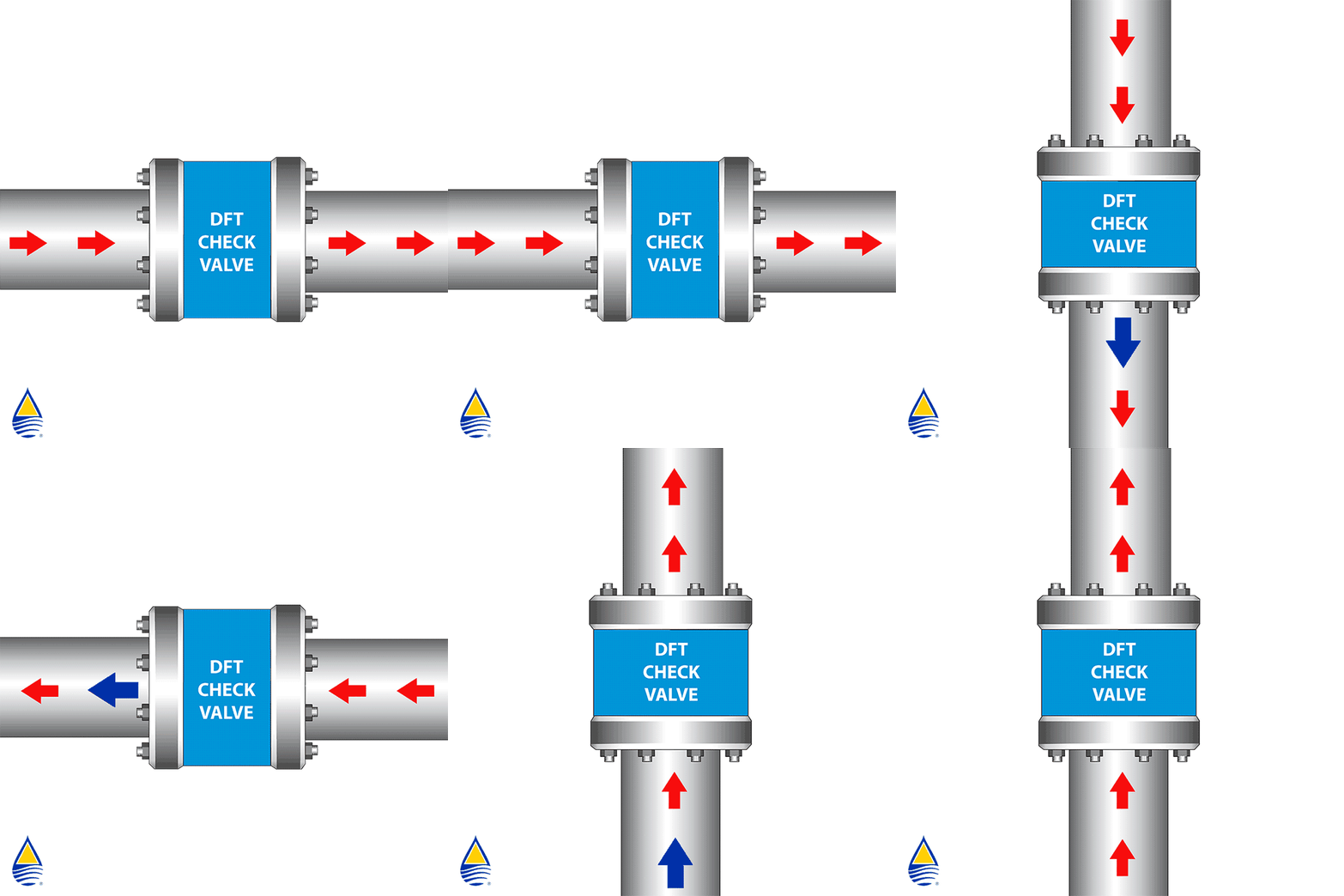
Horizontal Flow: This is the most common of the flow directions and all check valves will work in this situation. The question then becomes: “How do you chose one valve style over another?” It could be as simple as initial cost or lead time. This can be easily offset by the advantages centre guided valves have over swing check and dual door designs. The main benefit being the virtual elimination of water hammer, thus making the system more reliable and less troublesome. Maintenance and downtime are costly.
Vertical Flow (Up): This installation is common in mine de-watering and sump applications, or where space is at a premium. It is important to remember any foreign matter introduced into the system, such as sand, can settle on the closed valve causing it to not open or close properly. If we are aware of this, modifications can be made to help prevent the problem. Again, since spring assisted axial flow valves don’t require backflow to aid in closing, water hammer is not an issue and the system will work smoother.
Vertical Flow (Down): This is the most difficult flow direction for check valves to overcome. This orientation can be found in boiler supply lines and occasionally skid designs that are very space-limited. Some designs, such as swing checks, cannot be used in this situation, as they will open but not close. The spring assisted centre guided valves can be made to operate in this orientation. Given the static head pressure the valve is subject to, we can build the valve with a spring that allows for proper operation.
In closing, it is important to note that the greater the amount of information given, the easier it is to make an educated buying decision. DFT Check Valves come in different styles, wafer flanged and NPT, to satisfy most requirements. They are also available in exotic alloys and can be customized to suit most applications.
For more information please see the helpful resources below from www.dft-valves.com. We are here to help, so please contact us for any information you require.
Triangle Fluid Controls is the exclusive Canadian supplier of DFT Check Valves.
You May Also Be Interested In:
E-Book: Design for Flexibility: Key Considerations to Make When Designing Fluid or Gas Flow Systems
DFT Installation & Maintenance Manual